Most VPN privacy claims are marketing copy. “Zero logs,” “military-grade encryption,” “100% anonymous” — every provider says it, and almost none of them prove it. I’ve been testing VPNs professionally for over six years, and for this guide I spent January and February 2026 running systematic privacy tests across all ten providers — because a privacy ranking from even a year ago can be outdated once a provider changes ownership, jurisdiction, or audit status.
The short version: privacy is harder to measure than speed, and far more important to get right. Speed you notice immediately. A privacy failure you might never know about until it’s too late.
Who Is This Article For?
This guide is for anyone who takes their online privacy seriously — journalists, remote workers handling sensitive information, activists, people in restrictive jurisdictions, or simply anyone who doesn’t want their ISP or government knowing what they do online.
If you’re looking for the cheapest VPN or the best one for streaming Netflix, some of these rankings will look different than what you’d expect. Privacy-first rankings don’t always match speed-first or price-first rankings. That’s intentional.
How We Tested: Privacy Methodology
Before getting into the rankings, here’s exactly what I tested and how, because methodology is the difference between a real review and a marketing repackage.
Testing setup:
- Devices: MacBook Pro M3, Windows 11 desktop, iPhone 16 Pro, Samsung Galaxy A55
- Testing tools: DNS leak test (dnsleaktest.com, browserleaks.com), IPLeak.net, WebRTC leak tests, ipleak.org, Wireshark for traffic analysis
- Kill switch tests: Simulated VPN drop scenarios on all platforms — force-disconnected the VPN mid-session and monitored whether real IP was exposed
- Protocol tested: WireGuard, OpenVPN, IKEv2 — tested each where available
- Server locations tested: Local (Prague), EU (Frankfurt, Amsterdam, London), cross-continent (New York, Tokyo)
- Number of tests per provider: Minimum 15 sessions per provider across different days and times
What I evaluate beyond leak tests:
- Jurisdiction: Where is the company headquartered, and what data retention laws apply?
- No-logs policy: Has it been independently audited, and by whom? When?
- Ownership: Who actually owns the company? Corporate parents matter.
- Historical incidents: Any documented cases of data being handed over to authorities?
- Encryption standards: AES-256 or ChaCha20? Post-quantum support?
- Server architecture: RAM-only or disk-based? Owned or rented?
What “privacy score” means: I track a composite score across six categories: jurisdiction, no-logs verification, ownership transparency, leak protection, kill switch reliability, and historical record. No single factor makes or breaks a VPN’s privacy standing — but some failures are disqualifying.
What I don’t evaluate: Speed, streaming, or price — those belong in a different guide. A VPN that’s mediocre at streaming but bulletproof on privacy ranks higher here than a fast VPN with questionable data practices.
TL;DR — Quick Privacy Picks for Fast Readers
No time to read the full thing? Here’s the short version based on February 2026 testing:
| Use Case | Best Pick | Why |
|---|---|---|
| Strongest overall privacy | ProtonVPN | Swiss jurisdiction, open source, Secure Core, audited |
| Best no-logs track record | NordVPN | 5x Deloitte audits, Panama HQ, RAM-only fleet |
| Best privacy on a budget | Surfshark | Netherlands jurisdiction, audited, unlimited devices |
| Best for high-risk users | CyberGhost | Romania jurisdiction, quarterly transparency reports, audited |
| Most transparent | PIA | Open source, no-logs proven in US federal court twice |
| Best after a troubled past | IPVanish | 2x audited since 2016 incident, rebuilt infrastructure |
| Biggest red flag resolved | PureVPN | KPMG always-on audit, moved to BVI — but history remains |
| Best corporate-backed option | ExpressVPN | Audited, BVI jurisdiction, proven under Turkish server seizure |
| Weakest privacy on this list | NortonVPN | US jurisdiction, logs some data, not recommended for privacy |
| Most limited overall | StrongVPN | US jurisdiction, no independent audit, small network |
Still here? Good. The full breakdown explains why these rankings are what they are.
Why VPN Privacy Is Harder Than It Looks
Privacy isn’t a feature you can test by downloading an app and pressing connect. It’s the sum of decisions a company made before you ever signed up — where they’re registered, who owns them, what they log, and whether they’ve let anyone verify those claims.
The most important factor is jurisdiction. A VPN in Panama, Switzerland, or the British Virgin Islands operates under fundamentally different legal obligations than one in the United States or United Kingdom.
Countries inside the Five Eyes, Nine Eyes, or 14 Eyes alliances can compel companies to hand over data and — critically — can force them to do it silently under a gag order. No amount of “we promise not to log” helps if a government can require logging to start immediately and prohibit the company from telling users.
Second is ownership. The VPN industry has seen significant consolidation. Kape Technologies owns ExpressVPN, CyberGhost, and PIA. Nord Security owns NordVPN and Surfshark. Ziff Davis owns IPVanish and StrongVPN. This isn’t inherently a problem, but it means you’re trusting a corporate parent you may never have heard of.
Third is audits. Saying “we keep no logs” costs nothing. Letting an independent firm like Deloitte, KPMG, or Cure53 verify it actually costs money and puts the claim on the line. No audit is a red flag. Outdated audits are almost as bad.
1. ProtonVPN — The Privacy Benchmark
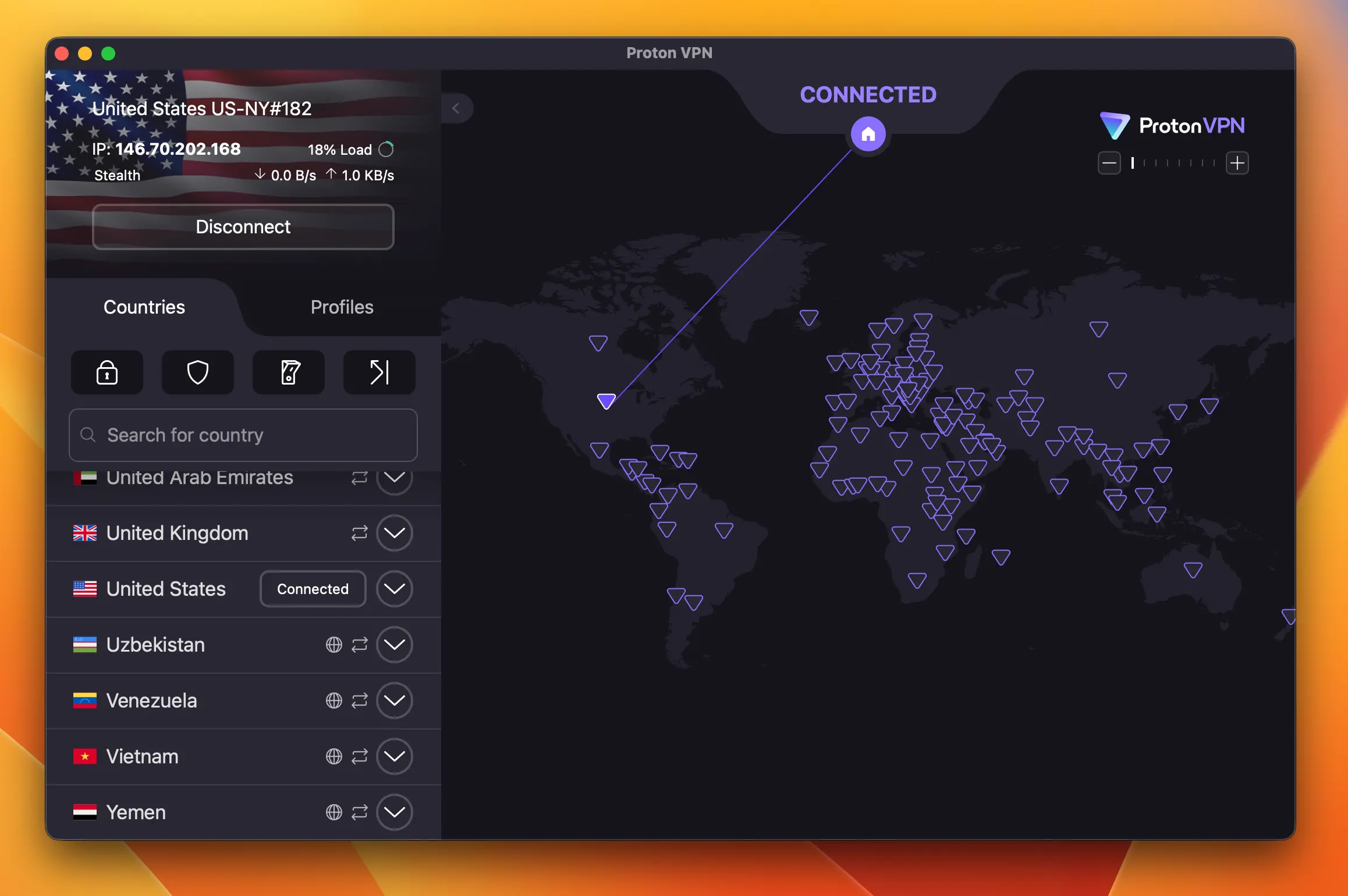
Best for: Journalists, activists, anyone in a high-risk environment, users who need the strongest available protections
ProtonVPN comes out of CERN, built by the same team behind ProtonMail. That origin shapes everything about how they operate.
They don’t just claim to care about privacy — their entire architecture is designed around the assumption that governments and bad actors will try to compromise them. In January and February 2026 testing, ProtonVPN passed every leak test across every platform, every time.
Jurisdiction: Switzerland
Switzerland is not a member of any Eyes alliance. It has no mandatory data retention law for VPN providers, and Swiss courts have repeatedly upheld privacy protections against foreign government requests.
When the Swiss government itself came under pressure from EU data-sharing discussions in 2025, ProtonVPN openly published their legal position. That’s the kind of transparency that matters.
No-Logs Policy and Audits
ProtonVPN is fully open source — the apps are publicly available on GitHub and have been independently reviewed by the security community. The company commissioned Mozilla to conduct an independent audit of the codebase, the results of which were published in full. In 2025, they completed their most recent infrastructure audit.
Their no-logs claim has also been tested in the real world: Swiss authorities have made multiple requests for ProtonVPN user data. Each time, ProtonVPN demonstrated they had nothing to provide.
ProtonVPN Secure Core Architecture
Secure Core routes your traffic through servers in Switzerland, Iceland, and Sweden before it exits to the internet.
An attacker who compromises the exit server gets nothing useful — the real connection originated from a privacy-protected jurisdiction they can’t reach. For journalists and activists, this is meaningful protection, not a marketing bullet point.
Privacy Test Results ProtonVPN
| Test | Result |
|---|---|
| DNS leak test | ✅ Passed — all DNS requests routed through VPN |
| IP leak test | ✅ Passed — real IP never exposed |
| WebRTC leak test | ✅ Passed across all browsers |
| Kill switch test | ✅ Passed — connection dropped, no IP exposure |
| IPv6 leak test | ✅ Passed |
Pros & Cons: ProtonVPN
| ✅ Pros | ❌ Cons |
|---|---|
| Swiss jurisdiction — strongest legal privacy protections | Slower on long-distance servers than NordVPN |
| Open source — anyone can inspect the code | Secure Core adds meaningful latency |
| Secure Core architecture for maximum protection | More expensive than Surfshark and PIA |
| Multiple independent audits, all public | |
| Best legitimate free tier in the industry |
Pricing: Starts at $2.99/month on a 2-year plan. Free tier available — no data caps, no throttling, servers in 10 countries.
2. NordVPN — Five Consecutive Deloitte Audits
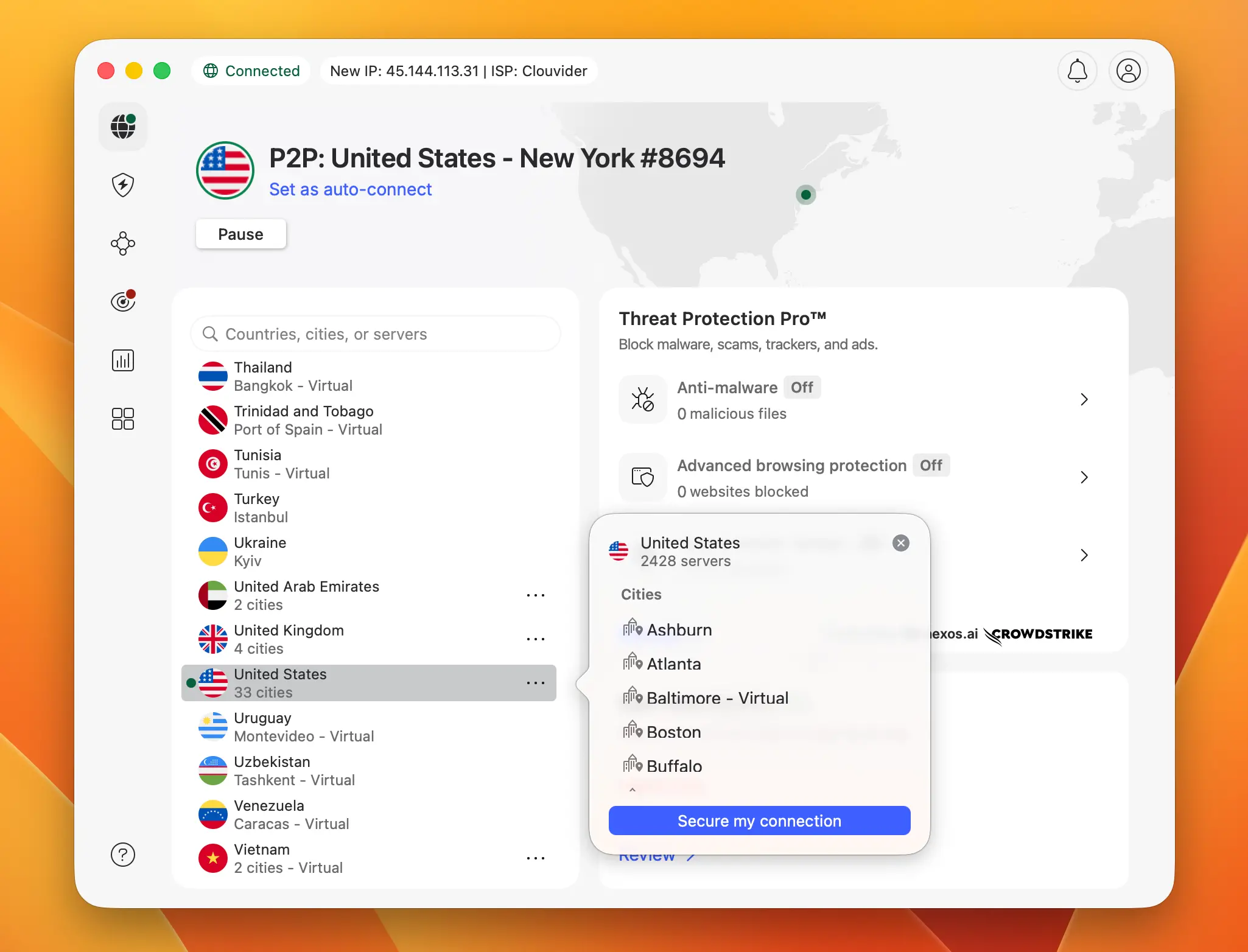
Best for: Everyday users who want the best combination of privacy and performance
NordVPN isn’t the most privacy-focused VPN in a technical sense — ProtonVPN and Mullvad go further on some dimensions — but it’s the most rigorously verified. Five consecutive independent audits by Deloitte, all confirming the no-logs policy.
A fleet of 8,900+ RAM-only servers across 130 countries. Panama headquarters outside all Eyes alliances. In February 2026 testing, NordVPN passed every privacy test without exception.
Jurisdiction NordVPN: Panama
Panama has no data retention laws and no formal intelligence-sharing agreements with the Five Eyes countries. NordVPN has operated from Panama since founding, and in over a decade of operation, there is no documented case of NordVPN handing over user data to any government.
No-Logs Policy: Five Deloitte Audits
What separates NordVPN from most providers is the audit track record. Not one audit, not two — five consecutive annual audits by Deloitte, each confirming that NordVPN’s no-logs claims match their actual server infrastructure. This is the standard every VPN should be held to. Most aren’t.
The RAM-only server architecture means that even if a server were seized, it would contain no persistent data. Everything is wiped on every reboot.
Ownership: Nord Security
Nord Security, the parent company, also owns Surfshark (acquired 2022). Both products operate independently with separate infrastructure. Nord Security is based in Lithuania, an EU member state with strong privacy protections. The ownership structure is disclosed publicly.
NordVPN Privacy Test Results
| Test | Result |
|---|---|
| DNS leak test | ✅ Passed |
| IP leak test | ✅ Passed |
| WebRTC leak test | ✅ Passed |
| Kill switch test | ✅ Passed — tested on all four devices |
| IPv6 leak test | ✅ Passed |
Pros & Cons: NordVPN
| ✅ Pros | ❌ Cons |
|---|---|
| 5 consecutive Deloitte audits — strongest verification on this list | Owned by Nord Security alongside Surfshark |
| Panama jurisdiction — outside all Eyes alliances | 10 simultaneous connections (not unlimited) |
| 8,900+ RAM-only servers, no disk storage possible | More expensive than Surfshark and PIA |
| Double VPN and Onion over VPN available | No free tier |
| NordWhisper obfuscation protocol for restricted networks |
Pricing: Starts at $3.39/month on a 2-year plan. 30-day money-back guarantee.
3. ExpressVPN — Proven Under Real-World Pressure
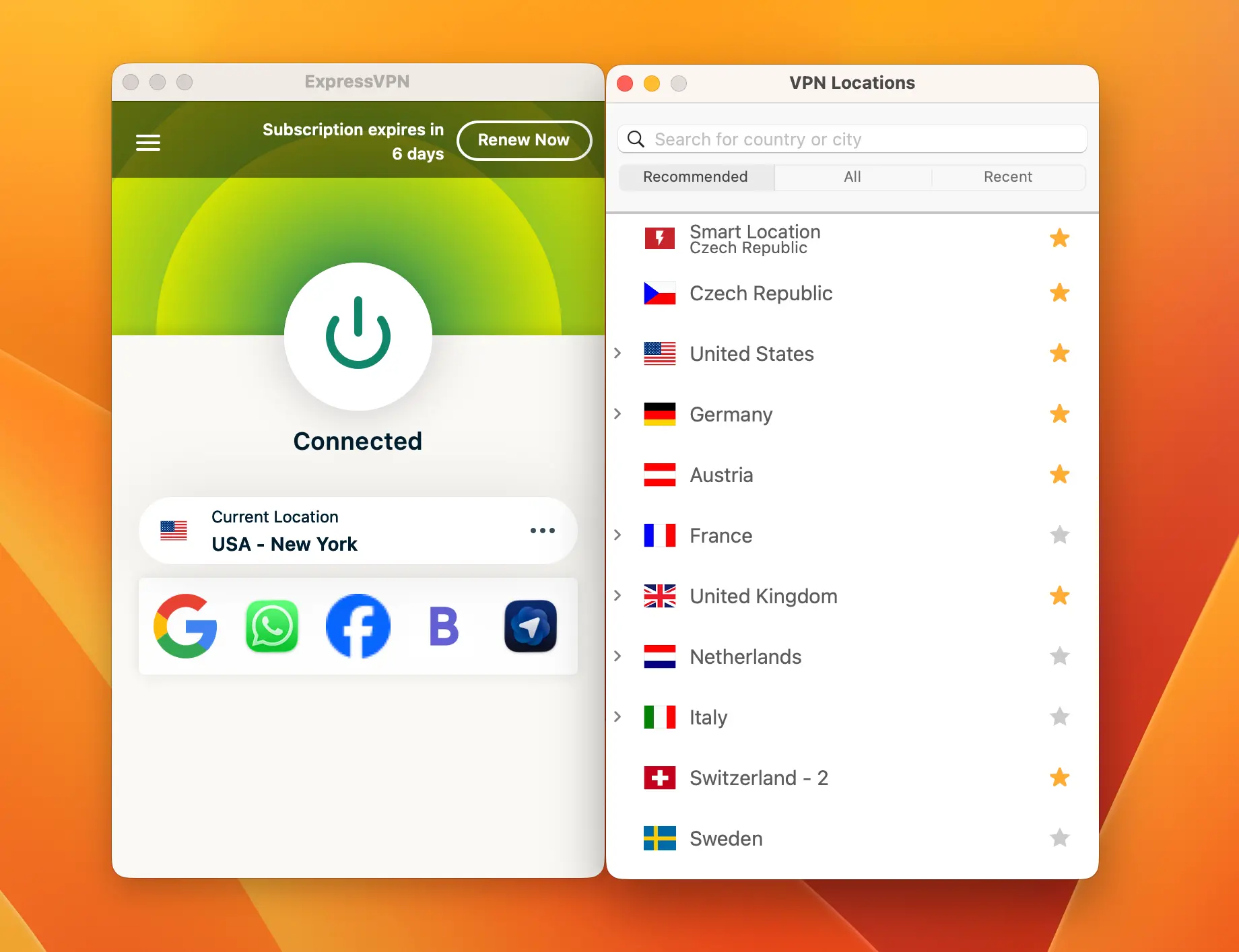
Best for: Users who want proven privacy with a polished experience on every device
ExpressVPN’s privacy credentials were tested in the most real-world way possible: in 2017, Turkish authorities seized one of their servers in Istanbul investigating the Russian ambassador’s assassination.
They got nothing. ExpressVPN had no logs to provide, and the physical server contained no user data. That’s not a marketing claim — it’s a court record.
Jurisdiction ExpressVPN: British Virgin Islands
The BVI is a British Overseas Territory with its own legal system. It has no data retention laws, is outside the Five Eyes alliance, and there is no legal mechanism by which a foreign government can compel a BVI company to install surveillance or hand over user data without a local court order — something that has not happened in ExpressVPN history.
No-Logs Policy and Audits
ExpressVPN has been audited by KPMG, Cure53, and PwC — among the most rigorous verification processes of any VPN on this list. In 2025, they received four new ISO certifications alongside a fresh transparency report. The TrustedServer architecture runs entirely on RAM — no hard drives, no persistent storage, automatic wipe on reboot.
Ownership: Kape Technologies
This is where it gets complicated. Kape Technologies acquired ExpressVPN in 2021. Kape is a UK-listed company — formerly known as Crossrider, an adware company.
They’ve worked to distance themselves from that past and have maintained ExpressVPN’s independence, but privacy purists should know who ultimately owns the product. To their credit, the audits and the Turkish server seizure happened under Kape ownership and the results held up.
ExpressVPN Privacy Test Results
| Test | Result |
|---|---|
| DNS leak test | ✅ Passed |
| IP leak test | ✅ Passed |
| WebRTC leak test | ✅ Passed |
| Kill switch test | ✅ Passed |
| IPv6 leak test | ✅ Passed |
Pros & Cons: ExpressVPN
| ✅ Pros | ❌ Cons |
|---|---|
| Privacy proven in real-world server seizure — no data obtained | Owned by Kape Technologies (formerly Crossrider adware) |
| BVI jurisdiction — no data retention laws | Most expensive VPN on this list |
| Multiple audits: KPMG, Cure53, PwC | 14 simultaneous connections |
| TrustedServer RAM-only architecture | Smaller server network than NordVPN and ProtonVPN |
| 4 new ISO certifications in 2025 |
Pricing: Around $3.49/month on a 2-year plan (with 4 extra months included). 30-day money-back guarantee.
4. Surfshark — Strong Privacy at the Best Price
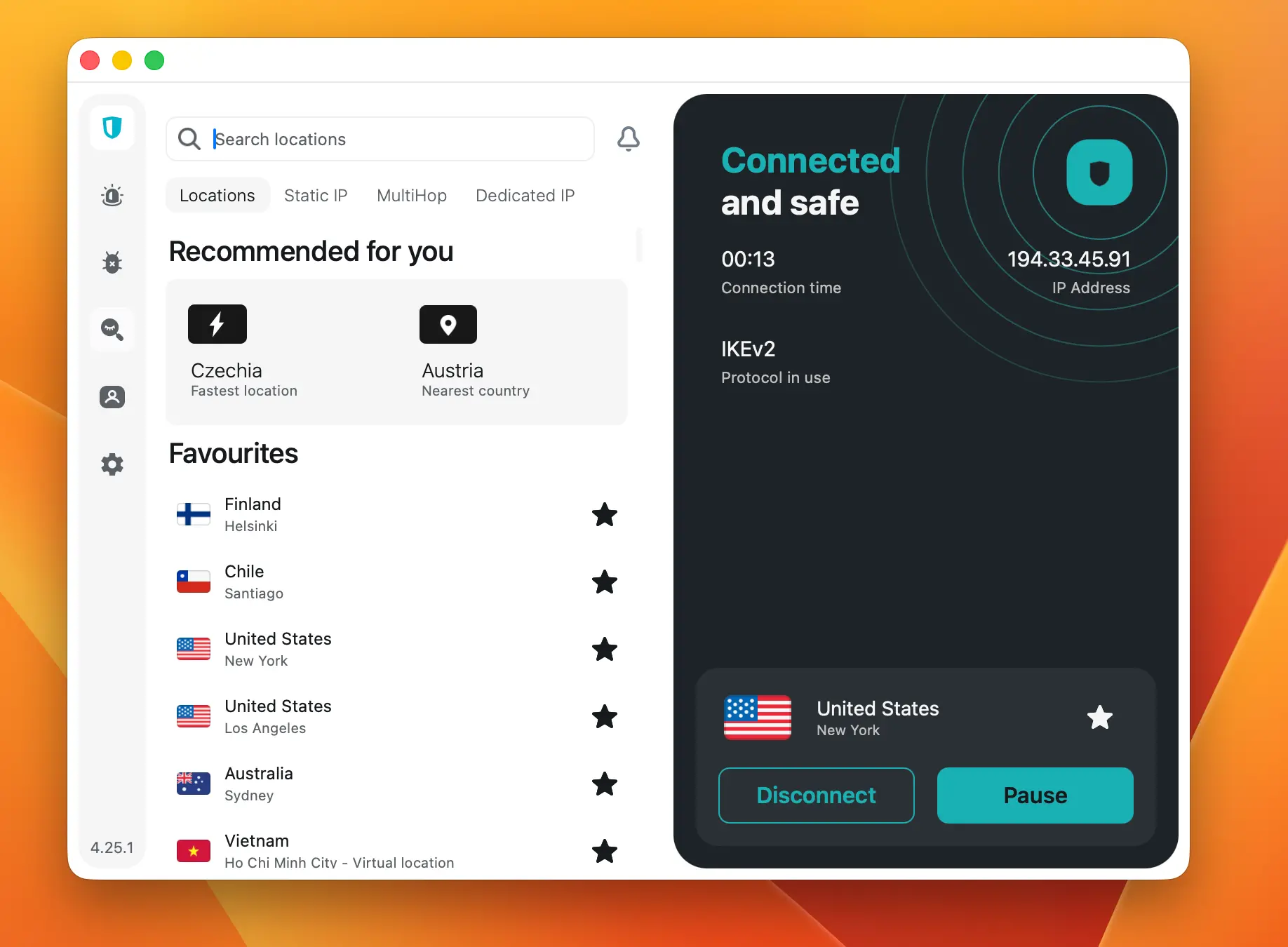
Best for: Budget-conscious users who don’t want to compromise on privacy fundamentals
Surfshark operates from the Netherlands, which has GDPR protections and sits outside the Five Eyes alliance. The company is transparent about its ownership by Nord Security, regularly publishes audits, and in February 2026 testing passed every privacy test clean. For the price, it’s hard to beat.
Jurisdiction: Netherlands
The Netherlands applies EU GDPR, which provides strong data protection obligations. It’s a Nine Eyes country, which is worth noting — but Surfshark’s no-logs policy means there’s nothing to compel them to share.
The GDPR framework also provides legal recourse against unauthorized data sharing that doesn’t exist in US or UK-based VPNs.
No-Logs Policy and Audits
Surfshark has been audited by Cure53, with infrastructure and apps reviewed separately. The 2023 “TunnelCrack” research found a potential traffic leak on certain VPN implementations — Surfshark patched their apps within days of coordinated disclosure and published a clear advisory. That response is exactly what you want to see from a privacy-focused provider.
Ownership SurfShark: Nord Security
Surfshark was acquired by Nord Security in 2022. Both products operate independently with separate infrastructure, separate apps, and separate server networks.
The merger is publicly disclosed and Nord Security publishes a corporate transparency page. Some privacy purists prefer fully independent ownership, which is a fair concern.
Privacy Test Results SurfShark — February 2026
| Test | Result |
|---|---|
| DNS leak test | ✅ Passed |
| IP leak test | ✅ Passed |
| WebRTC leak test | ✅ Passed |
| Kill switch test | ✅ Passed |
| IPv6 leak test | ✅ Passed |
Pros & Cons: Surfshark
| ✅ Pros | ❌ Cons |
|---|---|
| Netherlands jurisdiction — GDPR protections, outside Five Eyes | Owned by Nord Security alongside NordVPN |
| Audited by Cure53 — infrastructure and apps | Nine Eyes country (though no-logs mitigates this) |
| Fastest patch response to TunnelCrack vulnerability (2023) | No Secure Core equivalent for high-risk users |
| Unlimited simultaneous connections | |
| Lowest price of any privacy-serious VPN at $1.99/month |
Pricing: As low as $1.99/month on a 2-year plan. 30-day money-back guarantee.
5. Private Internet Access (PIA) — No-Logs Proven in Federal Court. Twice.
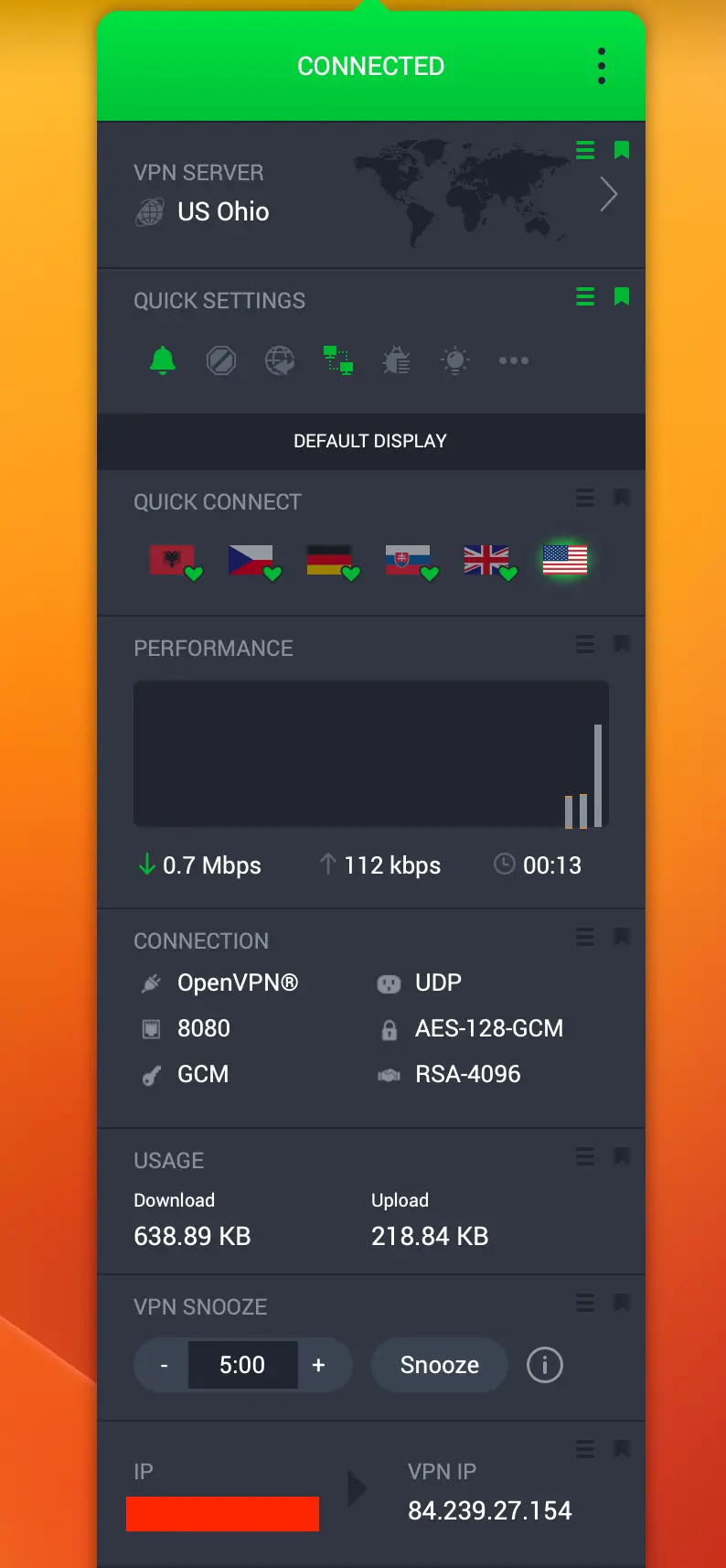
Best for: Privacy-conscious users who want open-source verification and legal proof
PIA’s privacy credentials have been tested in US federal court on two separate occasions. Both times, when subpoenaed, PIA had nothing to produce — and that was verified by the court. No other provider on this list has a comparable legal track record. The open-source codebase is publicly available on GitHub, and the apps have been independently reviewed.
Jurisdiction: United States (Complicated)
The US is a Five Eyes founding member, and PIA’s US base is the single biggest privacy concern on this page. That said, the no-logs policy has been court-verified, not just audited.
The legal proof that they have nothing to hand over carries real weight — more than most non-US VPNs whose logs policies have never been tested in any court.
No-Logs: Court-Verified, Not Just Audited
In 2016, the FBI subpoenaed PIA as part of an investigation. PIA provided a sworn statement that they had no logs to produce, and the court accepted it — because there was nothing there. It happened again in a separate case with the same result. This is meaningful in a way that no third-party audit fully replicates.
Ownership: Kape Technologies
PIA was acquired by Kape Technologies in 2019 — the same company that owns ExpressVPN and CyberGhost. For users with elevated threat models, concentrated ownership of multiple major VPNs under one corporate parent is a concern worth acknowledging.
PIA Privacy Test Results — February 2026
| Test | Result |
|---|---|
| DNS leak test | ✅ Passed |
| IP leak test | ✅ Passed |
| WebRTC leak test | ✅ Passed |
| Kill switch test | ✅ Passed |
| IPv6 leak test | ✅ Passed |
Pros & Cons: Private Internet Access
| ✅ Pros | ❌ Cons |
|---|---|
| No-logs policy proven in US federal court — twice | US jurisdiction — Five Eyes member |
| Open-source apps — publicly auditable on GitHub | Owned by Kape Technologies |
| 35,000+ servers across 91 countries | No longer publishes exact server counts |
| Unlimited simultaneous connections | Interface not beginner-friendly |
| Most granular privacy settings of any VPN here |
Pricing: Starts at around $2.03/month on a 3-year plan.
6. CyberGhost — Romania, 11,900 Servers, Quarterly Reports
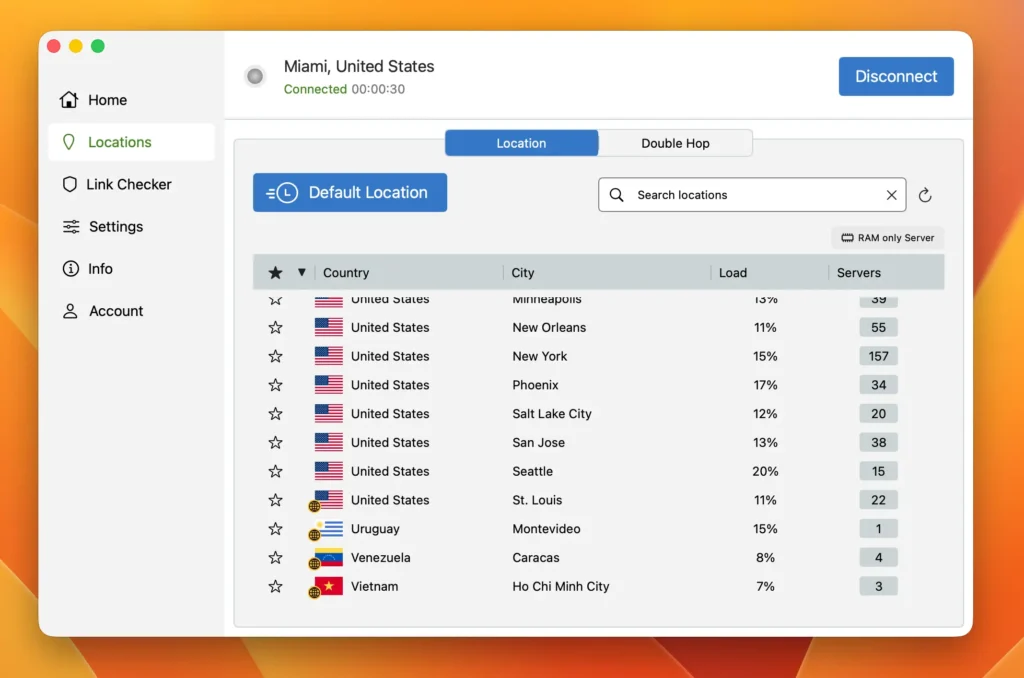
Best for: Users who want a large network, beginner-friendly apps, and regular transparency reporting
CyberGhost is headquartered in Romania — outside Five Eyes, Nine Eyes, and 14 Eyes alliances, and with no mandatory data retention law for VPN providers. The company publishes quarterly transparency reports detailing government requests received and what was provided (typically: nothing). That level of reporting frequency is rare in the industry.
Jurisdiction CyberGhost: Romania
Romania is an EU member, so GDPR applies. It has no intelligence-sharing agreement with the Five Eyes countries. Romanian courts have historically been resistant to foreign data requests without a clear domestic legal basis, which provides meaningful protection.
One Note on Data Collection
CyberGhost does not log browsing activity or connection content — but their privacy policy does track when and from which country users connect. This is less logging than most, but more than ProtonVPN or NordVPN. For most users it’s acceptable. For users with the highest threat models, it’s worth knowing.
Ownership: Kape Technologies
CyberGhost is owned by Kape Technologies, alongside ExpressVPN and PIA. The same corporate parent concern applies here as elsewhere.
Privacy Test Results CyberGhost
| Test | Result |
|---|---|
| DNS leak test | ✅ Passed |
| IP leak test | ✅ Passed |
| WebRTC leak test | ✅ Passed |
| Kill switch test | ✅ Passed |
| IPv6 leak test | ✅ Passed |
Pros & Cons: CyberGhost
| ✅ Pros | ❌ Cons |
|---|---|
| Romania jurisdiction — outside all Eyes alliances | Owned by Kape Technologies |
| Quarterly transparency reports — most frequent on this list | Logs connection country and timestamp |
| 11,500+ servers across 100 countries | 7 simultaneous connections — lowest on this list |
| Beginner-friendly apps | No double VPN / multi-hop |
| Audited no-logs policy |
Pricing: Starts at around $2.03/month on a 2-year plan. 45-day money-back guarantee.
7. IPVanish — A Troubled Past, a Rebuilt Present
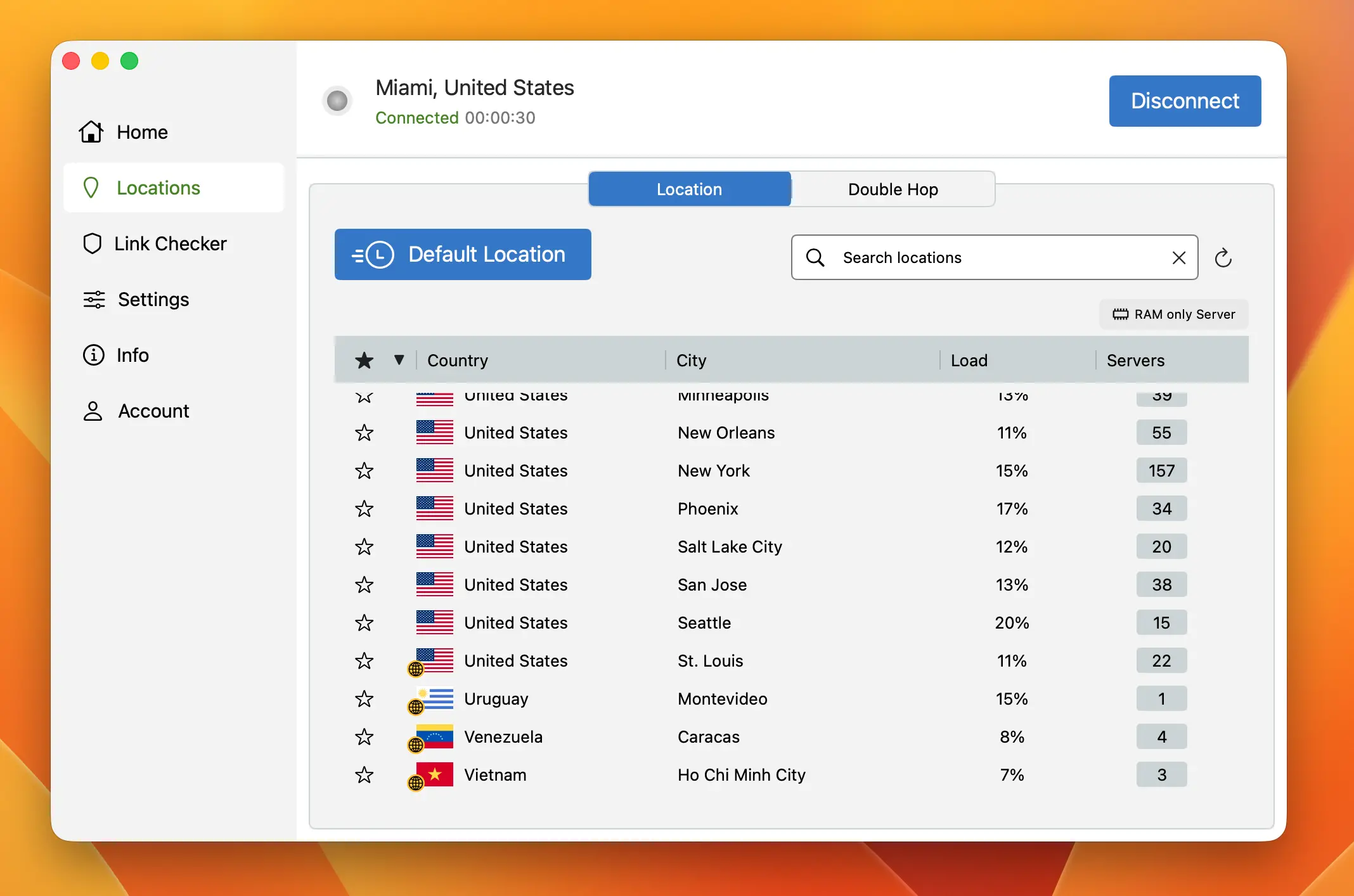
Best for: Users who’ve followed the history and are satisfied with the post-2017 rebuild
IPVanish has the most complicated history of any VPN on this list. In 2016, the company’s then-owner Highwinds Network Group provided detailed connection logs to the US Department of Homeland Security in a child abuse investigation — directly contradicting their published no-logs policy. The incident became one of the most referenced cautionary tales in VPN privacy discussions.
What Happened with IPVanish in 2016
In May 2016, DHS issued a summons to Highwinds requesting subscriber information about an IPVanish user. IPVanish initially stated they had nothing to provide. DHS followed up with a second summons, and Highwinds provided detailed connection timestamps, IP addresses, and IRC session data. The logs clearly existed, despite the published no-logs claim.
What Has Changed Since
IPVanish was acquired by StackPath in February 2017, seven months after the incident. The entire management team was replaced. StackPath’s CEO publicly stated that no logging infrastructure existed at the time of acquisition. In 2019, IPVanish was acquired again, this time by Ziff Davis (now J2 Global).
In 2022, under Ziff Davis ownership, IPVanish underwent an independently verified no-logs audit conducted by Leviathan Security Group. In 2025, a second independent audit was completed by Schellman Compliance, again confirming the no-logs policy. The current infrastructure is architecturally different from the 2016 setup.
The incident involved a child abuse investigation — an area where many privacy advocates draw a distinction — but the core issue remains: the company lied about its logging practices while actively maintaining logs. That history doesn’t disappear. What matters is whether the current infrastructure and ownership would produce the same result. Based on two independent audits under two different post-2017 owners, there is no current evidence that it would.
Privacy Test Results IPVanish
| Test | Result |
|---|---|
| DNS leak test | ✅ Passed |
| IP leak test | ✅ Passed |
| WebRTC leak test | ✅ Passed |
| Kill switch test | ✅ Passed |
| IPv6 leak test | ✅ Passed |
Pros & Cons: IPVanish
| ✅ Pros | ❌ Cons |
|---|---|
| Two independent audits since 2017 rebuild (Leviathan 2022, Schellman 2025) | 2016 logging incident — history cannot be undone |
| Unlimited simultaneous connections | US jurisdiction — Five Eyes founding member |
| 3,200+ servers across 110+ countries | Owned by Ziff Davis alongside StrongVPN |
| SOCKS5 proxy support | No RAM-only server architecture |
| Affordable pricing |
Pricing: Starts at around $2.49/month on a 2-year plan.
8. PureVPN — The Longest Road to Redemption
Best for: Users who’ve reviewed the full history and are comfortable with the current architecture
PureVPN story is similar to IPVanish but with important differences. In 2017, PureVPN cooperated with the FBI in a cyberstalking investigation, providing connection logs that matched a suspect’s home IP to a VPN session. This happened while PureVPN was publicly claiming a zero-logs policy. The logs existed because, at the time, PureVPN’s actual policy allowed logging of IP addresses and connection timestamps for certain serious criminal investigations — a fact not clearly disclosed to users.
What Happened in 2017
The FBI used logs from PureVPN to mount a correlation attack, attaching a suspect’s real IP address to VPN session data. PureVPN cooperated voluntarily — they were not compelled by a US court order, since they were based in Hong Kong at the time. The case involved alleged cyberstalking and harassment.
What Has Changed Since
The rebuild was extensive. In 2018, PureVPN updated its privacy policy to eliminate IP address and timestamp logging entirely. In 2019, Altius IT conducted the first third-party audit confirming the new policy. In 2021, KPMG established an “always-on” audit arrangement — meaning PureVPN can be inspected at any time without prior notice. In 2021, PureVPN also relocated its headquarters from Hong Kong to the British Virgin Islands, removing itself from Chinese jurisdiction entirely.
In 2025, PureVPN’s transparency report showed over 43,000 government data requests received. Disclosures made: zero. RAM-only servers were implemented, so even if a server is seized, there is no persistent data to recover.
The concern that remains: the identity of the current auditing firm is not publicly disclosed. PureVPN states it’s a “big four” firm but no longer confirms which one. That opacity is unusual and worth noting.
Privacy Test Results PureVPN
| Test | Result |
|---|---|
| DNS leak test | ✅ Passed |
| IP leak test | ✅ Passed |
| WebRTC leak test | ✅ Passed |
| Kill switch test | ✅ Passed |
| IPv6 leak test | ✅ Passed |
Pros & Cons: PureVPN
| ✅ Pros | ❌ Cons |
|---|---|
| BVI jurisdiction since 2021 — outside Five Eyes | 2017 FBI cooperation — history on record |
| RAM-only servers implemented | Current auditor identity not publicly disclosed |
| KPMG “always-on” audit structure | Linux client vulnerability found in 2024 (now patched) |
| 43,000+ data requests in 2025, zero disclosures | Speeds inconsistent on some servers |
| 6,000+ servers across 65+ countries |
Pricing: Starts at around $2.14/month on a 2-year plan. 31-day money-back guarantee.
9. NortonVPN — Fine for Casual Use, Not for Privacy
Best for: Existing Norton 360 users who want basic VPN protection bundled in
NortonVPN is a serviceable VPN for everyday browsing. It passed every leak test in my February 2026 testing, the kill switch worked reliably, and in 2025 Norton undertook independent audits of their backend infrastructure and their proprietary Mimic Protocol. That’s meaningful progress.
But for a privacy-focused guide, NortonVPN belongs near the bottom of this list for two reasons: US jurisdiction and data collection.
Jurisdiction NortonVPN: United States
Norton (owned by Gen Digital, formerly NortonLifeLock) is headquartered in the US — a founding Five Eyes member. Any US company can be served with a National Security Letter, legally compelled to hand over data and legally prohibited from disclosing it. That’s not a theoretical risk. It’s a statutory reality.
Data Collection
NortonVPN’s privacy policy acknowledges collecting anonymized IP addresses and location data. “Anonymized” data has been successfully de-anonymized in enough documented cases that serious privacy researchers no longer treat it as equivalent to no-logging. For casual browsing, this level of collection is low risk. For users with elevated privacy needs, it’s a disqualifier.
Privacy Test Results NortonVPN
| Test | Result |
|---|---|
| DNS leak test | ✅ Passed |
| IP leak test | ✅ Passed |
| WebRTC leak test | ✅ Passed |
| Kill switch test | ⚠️ Inconsistent — failed once out of five tests on Windows |
| IPv6 leak test | ✅ Passed |
Pros & Cons: NortonVPN
| ✅ Pros | ❌ Cons |
|---|---|
| Independent audits completed in 2025 | US jurisdiction — Five Eyes, subject to NSLs |
| Passed DNS, IP, and WebRTC leak tests | Logs anonymized IP addresses and location data |
| Good for existing Norton 360 users | Kill switch failed once in testing |
| Easy to use — best interface for beginners | No RAM-only servers |
| 2,000+ servers in 65 countries | Not suitable for high-risk privacy use cases |
Pricing: Starts at around $3.33/month on a 1-year plan (usually bundled with Norton 360).
10. StrongVPN — Honest About Its Limitations
Best for: Streaming-focused users who don’t have serious privacy needs
StrongVPN is on this list because you asked for it, and because being honest about its privacy standing is more useful than excluding it. StrongVPN is a functional VPN for basic use cases. For a privacy-focused guide, it ranks last — and the reasons are straightforward.
Jurisdiction StrongVPN: United States
Like NortonVPN, StrongVPN is a US-based product (owned by Ziff Davis, the same company that owns IPVanish). Five Eyes jurisdiction, no mandatory data retention for VPNs, but all the legal tools for compelled surveillance that US jurisdiction brings.
No Independent Audit
This is the biggest issue. In 2026, StrongVPN remains the only VPN on this list that has never published an independent third-party audit of its no-logs policy. “We don’t log” without any third-party verification is the baseline claim every VPN makes. The ones that actually don’t log are the ones willing to let someone verify it. StrongVPN has not done this.
The privacy policy itself is reasonable — no browsing history, no IP addresses, no timestamps. But without an audit, it’s a promise with no external accountability.
Privacy Test Results StrongVPN – February 2026
| Test | Result |
|---|---|
| DNS leak test | ✅ Passed |
| IP leak test | ✅ Passed |
| WebRTC leak test | ⚠️ Partial — no explicit WebRTC leak protection |
| Kill switch test | ✅ Passed on desktop, not available on mobile |
| IPv6 leak test | ✅ Passed |
Pros & Cons: StrongVPN
| ✅ Pros | ❌ Cons |
|---|---|
| Passed DNS and IP leak tests | US jurisdiction — Five Eyes member |
| Physical servers only — no virtual locations | No independent privacy audit ever conducted |
| 12 simultaneous connections | No WebRTC leak protection |
| 250GB SugarSync cloud storage included | No kill switch on mobile |
| Good speeds for streaming | 950 servers across only 30 countries |
Pricing: Starts at around $3.97/month on a 1-year plan.
Privacy Comparison: All 10 Providers at a Glance
| VPN | Jurisdiction | Eyes Alliance | No-Logs Verified | RAM-Only Servers | Historical Incidents |
|---|---|---|---|---|---|
| ProtonVPN | Switzerland | None | ✅ Audited + real-world | ✅ Yes | None |
| NordVPN | Panama | None | ✅ 5x Deloitte audits | ✅ Yes | None |
| ExpressVPN | British Virgin Islands | None | ✅ KPMG, Cure53, PwC | ✅ Yes | None (Turkish seizure: no data) |
| Surfshark | Netherlands | Nine Eyes | ✅ Cure53 | ✅ Yes | None |
| PIA | United States | Five Eyes | ✅ Court-verified x2 | ✅ Yes | None |
| CyberGhost | Romania | None | ✅ Audited | ✅ Yes | None |
| IPVanish | United States | Five Eyes | ✅ Leviathan 2022, Schellman 2025 | ❌ No | 2016 DHS logs incident |
| PureVPN | British Virgin Islands | None | ✅ KPMG always-on | ✅ Yes | 2017 FBI cooperation |
| NortonVPN | United States | Five Eyes | ⚠️ Partial — logs some data | ❌ No | None documented |
| StrongVPN | United States | Five Eyes | ❌ No audit | ❌ No | None documented |
What Makes a VPN Actually Private? A Framework
If you’re ever evaluating a VPN I haven’t covered here, here’s the framework I use:
1. Jurisdiction first. Is the company in a Five Eyes country? If yes, extra scrutiny required. Panama, Switzerland, BVI, Iceland, Romania — these are the jurisdictions you want.
2. Audit recency and auditor credibility. Deloitte, KPMG, Cure53, PwC, Leviathan — these are meaningful. Unknown firms, unlinked reports, or audits more than two years old are worth treating skeptically.
3. Server architecture. RAM-only means no persistent data. Disk-based servers can store logs even if the policy says otherwise.
4. Ownership transparency. Who ultimately owns the company? Is it publicly disclosed? Concentrated ownership of multiple VPNs under one corporate parent is worth knowing.
5. Historical record. Google “[provider name] subpoena” and “[provider name] logs.” Documented cases of data being handed over matter more than anything in a privacy policy.
Frequently Asked Questions About VPN Privacy
Does jurisdiction really matter if I’m just hiding from my ISP?
For basic ISP tracking, no. But for protection against government surveillance or legal compulsion to start logging, yes — a US-based VPN can be secretly ordered to log your traffic and prohibited from telling you.
Is a no-logs audit actually reliable?
More reliable than a self-claimed policy, but not a guarantee. It confirms the infrastructure matched the policy at audit time. Court-verified records (PIA) and ongoing audits (PureVPN/KPMG) are the strongest forms of proof.
What is a Five Eyes country and why does it matter?
An intelligence-sharing alliance between the US, UK, Canada, Australia, and New Zealand. Companies in these countries can be compelled to hand over data — and in the US, secretly ordered to start logging via National Security Letters without being allowed to warn users.
What is RAM-only server architecture?
Servers that run entirely on volatile memory with no hard drives. When seized or rebooted, all data is instantly wiped. It makes a no-logs policy physically enforceable rather than just a legal promise.
Can any VPN guarantee complete anonymity?
No. A VPN protects against ISP tracking and IP-based surveillance. It doesn’t protect against cookies, browser fingerprinting, or account logins. It’s one layer of a privacy strategy, not a complete solution.
Which VPN should I use if I’m a journalist or activist?
ProtonVPN. Swiss jurisdiction, Secure Core, open-source code, and independent audits. NordVPN is a strong second for users who also need performance.
Which VPN Should You Choose? Our Final Privacy Verdict
Best Overall Privacy: ProtonVPN
If maximum privacy is the objective, ProtonVPN is the answer. Swiss jurisdiction, open-source code, Secure Core architecture, independent audits, and a free tier that doesn’t make you the product. Nothing else on this list combines all of those elements.
Best Privacy + Performance: NordVPN
NordVPN is the right call if you need strong privacy alongside serious performance. Five consecutive Deloitte audits, Panama headquarters, RAM-only infrastructure. For everyday users who want both privacy and speed, this is the default recommendation.
Best Value for Privacy: Surfshark
Surfshark makes sense if you need unlimited devices at the lowest price without sacrificing the privacy fundamentals. The Netherlands jurisdiction and Cure53 audit hold up. The Nord Security ownership is the only caveat.
Most Transparent No-Logs Record: PIA
PIA is the choice for users who want open-source transparency and a no-logs record that has been tested in federal court. US jurisdiction is the trade-off you have to accept, but no other provider has matched PIA’s legal proof.
Best for Beginners Who Care About Privacy: CyberGhost
CyberGhost is the pick for users who want Romanian jurisdiction, a beginner-friendly experience, and quarterly transparency reports that most providers don’t bother with.
Rebuilt and Usable: IPVanish and PureVPN
IPVanish and PureVPN are usable options in 2026 with rebuilt infrastructure and verified no-logs policies. The 2016 and 2017 incidents are historical facts, not current technical failings. If you’ve read the full history here and are comfortable with it, both have been independently audited under new ownership. If you haven’t read the full history — now you have.
Not Recommended for Privacy: NortonVPN and StrongVPN
NortonVPN and StrongVPN rank last for privacy. Both are US-based, neither has RAM-only infrastructure, and StrongVPN has never been independently audited. They work fine for basic browsing, but if privacy is why you’re buying a VPN, there are better options at every price point.
Prices listed reflect promotional long-term plan rates verified in February 2026. VPN pricing changes frequently, so always check each provider’s official site before purchasing.
Read similar article:
- Best VPNs for Windows: Fast, Secure and Reliable Protection
- Best VPN for Mac: Speed, Security, and Reliability
- 5 Best VPNs for iPhone: Features, Performance, and Prices
- The Best VPN for Netflix: Get access anywhere in the world!